
Patient Cost Estimator Software for Healthcare Practices
Fuse builds each patient cost estimate from CPT-level benefits and the allowed amounts in your adjudicated claims. The estimate writes back to your EMR and can go to the patient by text or email before the visit.
Your front desk quotes a real number at scheduling instead of a range, and patients know their share before they arrive. Fuse reduces admin time by up to 95%.

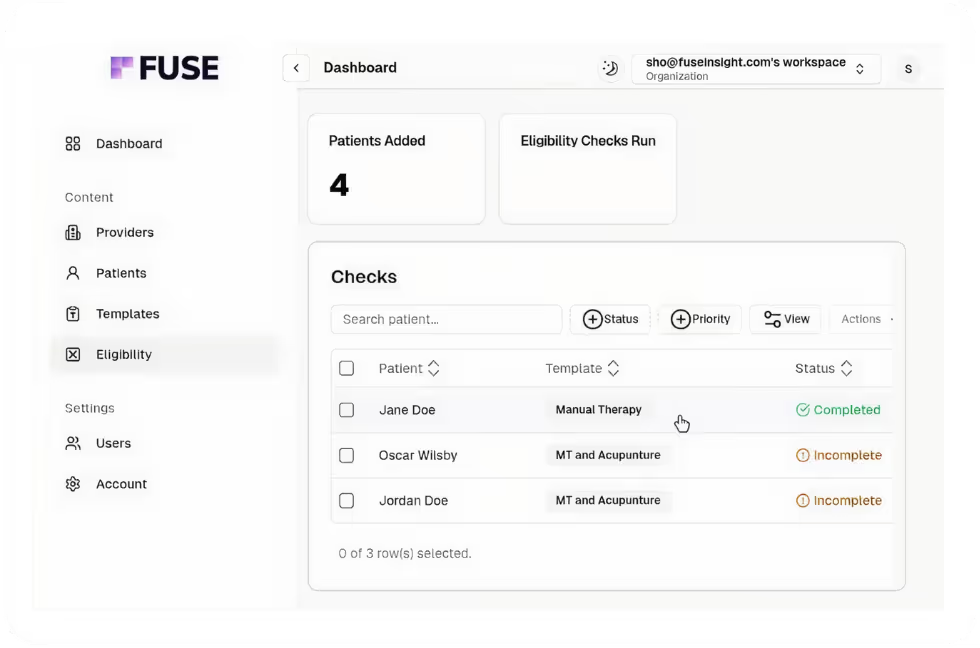









Why Do Patient Cost Estimates Miss?
Most estimates miss because they start from eligibility data instead of what the plan actually pays. An eligibility check with a tool like Availity or Waystar confirms coverage, but it often leaves out procedure-specific copays, coinsurance and the patient's remaining deductible.
Estimates also go wrong when they use a generic fee schedule instead of the allowed amount the plan pays your practice. When the bill comes in higher than the estimate, patients pay late, dispute the charge or don't come back.
How Does Fuse's Patient
Cost Estimator Work?
Fuse gathers each patient's benefits at the CPT code level, applies the allowed amount your practice is actually paid, and calculates what the patient owes. The benefits come from three sources.
- Payer portals and EDI eligibility checks.
- Calls to the payer when a benefit is not shown online.
- Your adjudicated claims, which show what each plan actually covered and allowed.
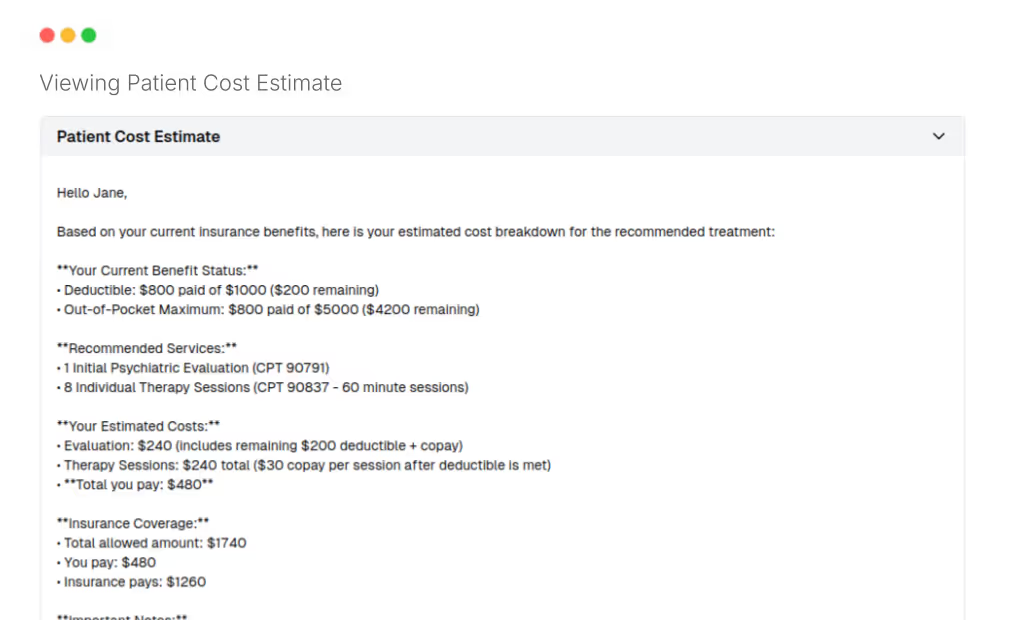
What does a patient cost estimator do?
It tells your staff and your patient what the patient will owe before the visit. The estimate breaks out the allowed amount, the part insurance pays and the patient's cost share, split into deductible, coinsurance and copay.
How is patient responsibility calculated?
Start from the allowed amount, then apply the deductible, coinsurance and copay in order. Take a visit with a $200 allowed amount. The patient has $120 left on the deductible and 20% coinsurance after it. The patient pays the $120 first, then 20% of the remaining $80, which is $16. The patient owes $136 and the plan pays $64. If the plan instead charges a flat $30 copay for this visit with no deductible, the patient owes $30.
Why does Fuse use adjudicated claims?
Claims show what a plan actually allowed and covered for a code, not just what the benefit summary says. Fuse uses them to confirm coverage and allowed amounts plan by plan, so the estimate matches how each payer has been processing your claims.
How Do Estimates Reach Your EMR and Your Patients?
Fuse writes each estimate back into your EMR and can text or email it to the patient. Your front desk sees the estimate where it already works, and the full breakdown stays in the Fuse app.
Fuse works with SimplePractice, TherapyNotes, Healthie, Jane, AthenaOne, DrChrono, AdvancedMD, Tebra, NextGen, ClaimMD, Gmail, RingCentral and most other EMRs and tools. Staff stop logging into portals and doing benefit math by hand, and Fuse reduces admin time by up to 95%.

Fuse automates:
- CPT-level benefits checks through payer portals, EDI and payer calls
- Allowed amounts drawn from your adjudicated claims
- Estimate write-back to your EMR
- Estimates sent to patients by text or email

What Should You Look for in Patient Estimation Software?
Look at where the numbers come from before you look at the patient-facing screen. Ask these questions of any tool you consider.
- Does it check benefits at the CPT code level, or only confirm active coverage?
- Do its allowed amounts come from what each plan actually paid you, or from a generic fee schedule?
- Does it track the patient's remaining deductible and out-of-pocket maximum?
- Does the estimate write back to your EMR, or live in another tab?
- Can it send the estimate to the patient by text or email?
- Is it HIPAA compliant and SOC 2 Type II audited?
Our guide to improving patient fee estimate accuracy covers the workflow side in more detail.
HIPAA-Compliant Healthcare Automation Platform




Get Started with Patient Cost Estimates Today
Fuse connects estimates to the rest of your front end. Details captured at patient intake flow into automated insurance verification and granular CPT-level benefits data, powering estimates that improve patient collections from the first visit.
See how Fuse can improve patient satisfaction and collections with accurate and transparent fee estimates. Schedule a free demo to learn how easy transparent billing can be.
FAQs
What is a patient cost estimator?
A patient cost estimator calculates what a patient will owe for a visit before it happens. It combines the patient's benefits for each CPT code, the allowed amount for the service and how much of the deductible and out-of-pocket maximum the patient has already met. The result is the patient's cost share for that visit.
How does Fuse calculate patient responsibility?
Fuse starts from the allowed amount for each CPT code, then applies the patient's remaining deductible, coinsurance and copay. The benefits come from payer portals and EDI, calls to the payer where needed, and your adjudicated claims, which show what each plan actually covered and allowed.
Where do the allowed amounts in an estimate come from?
Fuse takes them from your adjudicated claims, so the estimate uses what each plan actually allowed your practice for that code. Eligibility responses and generic fee schedules often miss that number, which is a common reason estimates come out wrong.
Does the estimate show up in our EMR?
Yes. The estimate is available in the Fuse app, and Fuse can write it back into your EMR. Fuse works with SimplePractice, TherapyNotes, Healthie, Jane, AthenaOne, DrChrono, AdvancedMD, Tebra, NextGen and most other EMRs.
Can Fuse send the estimate to the patient?
Yes. Fuse can text or email the estimate to the patient before the visit. Fuse also works with Gmail and RingCentral.
Why might a final bill differ from the estimate?
A final bill can differ when the services delivered change, another claim posts to the deductible first, or the plan changes between the estimate and the visit. Fuse uses the latest benefits and deductible information available when it builds each estimate.
Is Fuse's patient cost estimator HIPAA compliant?
Yes. Fuse is HIPAA compliant and SOC 2 Type II compliant, verified through an external audit.