Blue Cross Blue Shield of Illinois Behavioral Health Reimbursement Rates (2026)
Blue Cross Blue Shield of Illinois pays a median of $133.67 for a 60-minute therapy session (90837). A state law that starts with 2027 plan years requires about $232 or more, but only on fully insured PPO plans. HMO members and most employer self-funded plans are exempt, so many of these rates will still apply after 2027.
We read all ten of Blue Cross and Blue Shield of Illinois’s statewide network files for September 2026, 20 gigabytes of pricing data once unzipped. They cover its PPO, Blue Choice, Blue Options, HMO Illinois, Blue Advantage, Blue Precision, BlueCare Direct, and MyBlue networks. We left out about 1,100 smaller files that each repeat one HMO medical group’s slice of those networks. We also left out the BlueCard files that mirror other Blue plans. We kept dollar rates and dropped rows under $5, which removed 37 rows. We matched each NPI against the federal NPPES registry and kept behavioral health clinicians whose practice location is in Illinois. A clinician listed at the same rate on several plans is counted once.
What Does Blue Cross Blue Shield of Illinois Pay for Therapy and Testing?
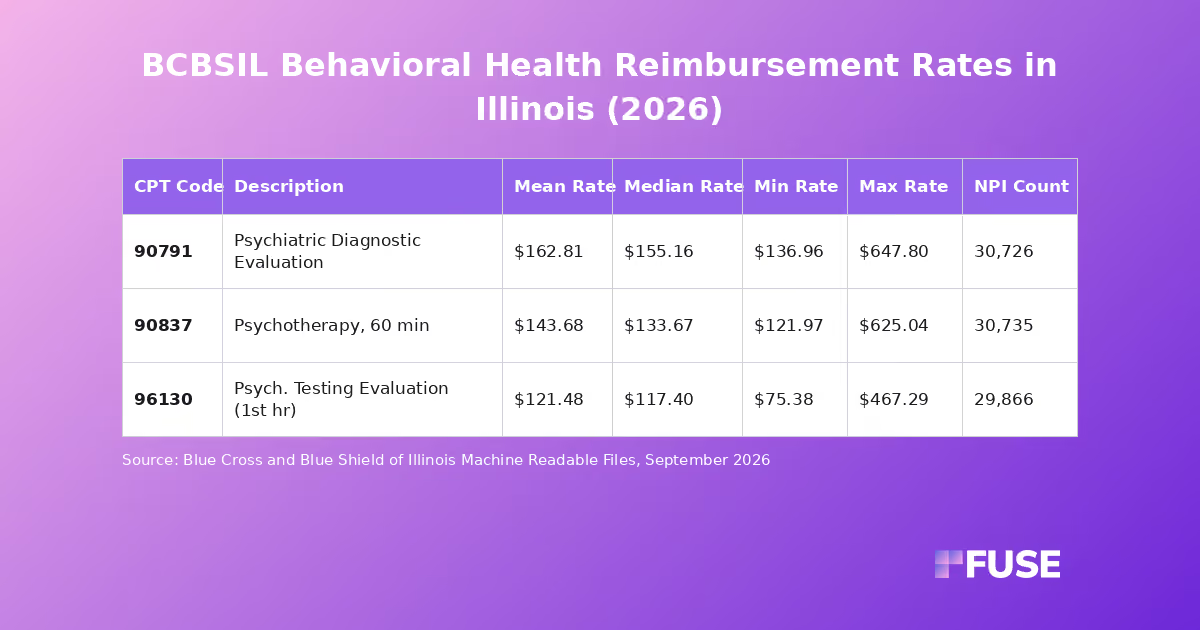
A 60-minute session, CPT 90837, pays a median of $133.67.
The table covers 30,735 Illinois clinicians with a 90837 rate, 30,726 with a rate for a diagnostic evaluation (90791), and 29,866 with a rate for the first hour of psychological testing (96130).
| CPT Code | Description | Mean Negotiated Rate | Median Negotiated Rate | Min | Max | Unique NPI Count |
|---|---|---|---|---|---|---|
| 90791 | Psychiatric Diagnostic Evaluation | $162.81 | $155.16 | $136.96 | $647.80 | 30,726 |
| 90837 | Psychotherapy, 60 minutes | $143.68 | $133.67 | $121.97 | $625.04 | 30,735 |
| 96130 | Psychological Testing Evaluation, 1st hour | $121.48 | $117.40 | $75.38 | $467.29 | 29,866 |
Rates extracted from Blue Cross Blue Shield of Illinois’s September 2026 machine readable files.
About 9 in 10 of these clinicians have more than one 90837 rate. Blue Cross lists each rate for a group of providers, and one clinician can belong to several groups. Two amounts account for about 6 in 10 of the 90837 rates. They are the minimum, $121.97, and the median. The average, $143.68, sits above the median because a smaller set of contracts pays much more. The highest 90837 rate in the file is $625.04.
A diagnostic evaluation pays a median of $155.16. The first hour of testing pays a median of $117.40. Where the Illinois 90837 rate sits among other Blue plans is in the BCBS 90837 rates by state comparison.
How Far Below Illinois’s 2027 Rate Floor Are These Rates?
About 99 in 100 of the 90837 rates sit under it.
From 2027, Section 370c.4 of the Illinois Insurance Code sets a minimum payment for in-network mental health care on covered plans. The minimum is 141.7% of what Medicare pays a physician for the same code in the same area. The Department of Insurance spells out the math in its September 11, 2026 bulletin. At 2026 Medicare rates, the floor works out to these amounts.
| Medicare area | 90791 | 90837 | 96130 |
|---|---|---|---|
| Chicago (Cook County) | $248.46 | $239.40 | $182.21 |
| Suburban Chicago (DuPage, Kane, Lake, Will) | $249.34 | $240.17 | $181.08 |
| Madison, St. Clair and 9 nearby counties | $241.56 | $233.07 | $175.89 |
| Rest of Illinois | $240.69 | $232.23 | $173.63 |
The real 2027 floor uses Medicare’s final 2027 rates, which usually come out in early November. After that, the floor changes whenever Medicare’s rate does. The law says it cannot go down from one year to the next.
In the September 2026 files, about 99 in 100 of the 90837 rates are under $232.23, the lowest floor in the state. For about 97 in 100 clinicians, even their highest 90837 rate is under it. About 98 in 100 of the 90791 rates are under $240.69. More than 9 in 10 of the 96130 rates are under $173.63, though about 1 in 5 clinicians has at least one testing rate above it.
Which Blue Cross Plans Must Pay the 2027 Floor?
Fully insured PPO plans issued in Illinois, from the first plan year that begins on or after January 1, 2027.
The Department of Insurance bulletin says who is covered.
- Covered. Individual and group PPO policies, counted from each policy’s own plan year. A group plan that renews on July 1, 2027 gets the floor on that date.
- Covered. Self-funded plans for Illinois counties, cities, and school districts that use a PPO network.
- Not covered. HMO plans.
- Not covered. Other self-funded employer plans, Medicaid, Medicare, and federal employee plans.
The floor attaches to the date of service, not to the date on your contract. If your fee schedule pays less than the floor on a covered plan, Blue Cross still owes the floor. So the rates in these files may not change even where the payment does. Blue Cross told providers on September 14, 2026 that in-network reimbursement may change and that no action is needed. The same fee schedule also covers HMO members and most self-funded employers, so one code can pay two amounts depending on the patient’s plan.
Does Blue Cross Require Prior Authorization for Outpatient Therapy in Illinois?
No, for state-regulated plans, since January 1, 2026.
Section 370c of the Illinois Insurance Code bars those plans from requiring prior authorization for outpatient therapy, including care from trainees under a licensed clinician. Blue Cross can still ask you to report a new patient within 2 business days of the first session, and it can review records later. Its January 12, 2026 notice asks for the first date of treatment. Self-funded employer plans are not bound by this law.
Psychological testing changed on a different date. Blue Cross’s February 24, 2026 notice removed psychological and neuropsychological testing codes, including 96130, from its commercial prior authorization list as of April 1, 2026. Check eligibility and benefits before the first visit.
Does Blue Cross Have to Pay the Same Rate for Telehealth Therapy in Illinois?
Yes, for state-regulated plans.
Section 356z.22 of the Illinois Insurance Code requires those plans to pay an in-network clinician the same rate for live video as for the same service in person. The equal-rate rule ends for most medical care on January 1, 2028. It stays in force for mental health and substance use care. The Department of Insurance applies the same idea to the 2027 floor. A covered plan must pay the floor for a telehealth session even where Medicare would pay less for telehealth. A contract can still set a different telehealth rate if both sides agree.
What Does Illinois Medicaid Pay for These Same Codes?
More than most Blue Cross rates, for therapy.
The state fee schedule for independent therapists, updated July 28, 2026, pays $198.32 for a 60-minute session (90837) and $219.46 for a diagnostic evaluation (90791). It applies to licensed clinical social workers, counselors, marriage and family therapists, and psychologists. Most of each amount is a psychiatric add-on that Illinois has paid on top of its base rates since 2019. The current amounts took effect January 1, 2025. That is why Medicaid pays more than commercial here, the reverse of the usual pattern. About 97 in 100 of the Blue Cross 90837 rates are below the Medicaid amount.
Testing goes the other way. Medicaid pays a psychologist $55.79 for the first hour of 96130, and only psychologists can bill that code. Every 96130 rate in the Blue Cross files is higher. The commercial median is $117.40.
These are fee-for-service amounts. About 3 in 4 Illinois Medicaid members are in a managed care plan, and those plans can pay a different rate.
What Do Illinois Therapists Charge for a Self-Pay Session?
More than the Blue Cross 90837 median, at the practices that post a fee.
A psychology group in Schaumburg posts $170 for a follow-up with a doctoral clinician and $145 with a master’s-level clinician. The page does not say how long the session is. A counseling group in Springfield charges $150 for a follow-up, also without a session length. A Chicago psychologist who is out of network charges $235 for 50 to 55 minutes. The Blue Cross median for a 60-minute session is $133.67.
Testing is priced as a package, not as one hour of 96130. The Schaumburg group charges $210 an hour for testing. A Champaign practice that does not take insurance charges around $800 for a typical ADHD evaluation and $3,000 for a comprehensive one.
How Do You Check Your First 2027 Blue Cross Payments Against the Floor?
Work out your own floor amounts in November, then compare each covered claim’s payment with them.
- November 2026. When Medicare publishes its final 2027 rates, multiply the amount for each code you bill by 1.417. Use the Medicare area where you see the patient.
- Before January. Pull your Blue Cross fee schedule for 90791, 90837, and 96130 and mark each code that pays under your floor. Our guide to looking up a negotiated rate shows how to find one clinician’s rate in these files.
- From January 2027. Confirm the plan type in the eligibility response before you bill. Only fully insured PPO plans and local-government plans owe the floor, and only once their 2027 plan year starts.
- On each remittance. Compare the allowed amount on covered claims with your floor. If it is lower, appeal the claim with Blue Cross and cite Section 370c.4(b). The Department of Insurance also takes complaints about state-regulated plans.
- Through mid-2027. Repeat the check as group plans renew on their own dates.
HMO and most employer self-funded claims will keep paying your contract rate. The floor is still a useful reference when you ask for a raise on those plans, and our guide to negotiating insurance contract rates covers how to make that request. Fuse already compares each payment with the contracted rate and flags underpayments. Reach out if you want that check run on your Blue Cross claims.
Disclaimer: This article uses rate information from the Machine Readable Files that Blue Cross and Blue Shield of Illinois publishes under the federal Transparency in Coverage rule. These files are posted to satisfy the regulation, not to be read. The files behind this analysis unpack to 20 gigabytes of raw pricing data that no spreadsheet can open. Fuse built its own software to extract and verify the figures above. This analysis focuses on a single payer and will not reflect rates from all available insurance options in Illinois. The 2027 floor figures are estimates from 2026 Medicare rates and will change when Medicare publishes its 2027 rates. Fuse makes every effort to provide accurate and current information, but healthcare pricing and coverage policy change frequently, and individual circumstances affect actual payment. This information does not guarantee specific pricing. Practices should verify current rates directly with Blue Cross Blue Shield of Illinois before relying on them for billing or negotiation decisions.
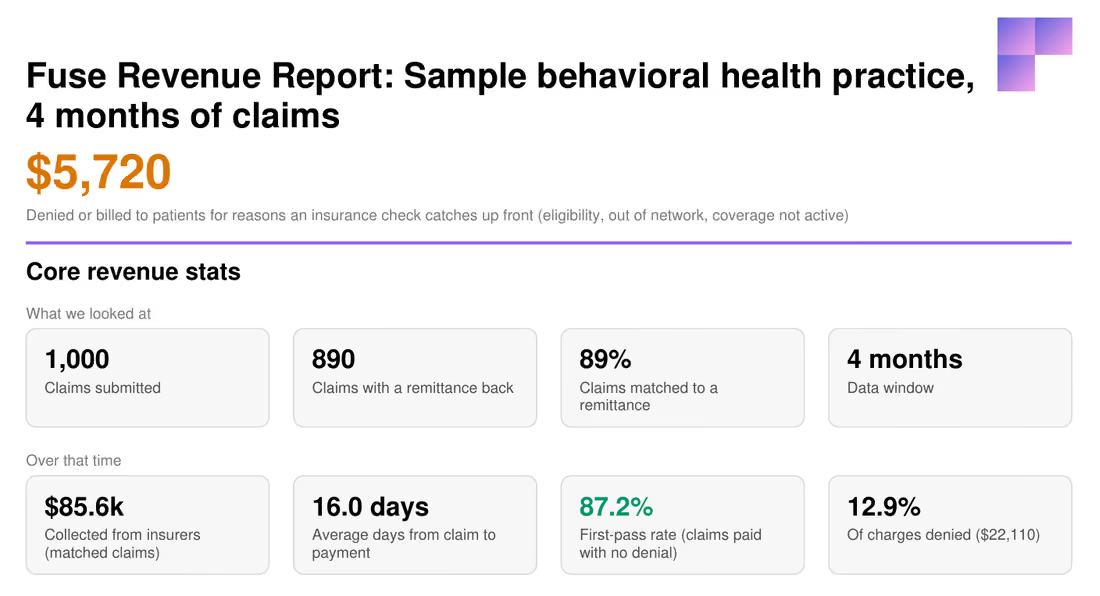
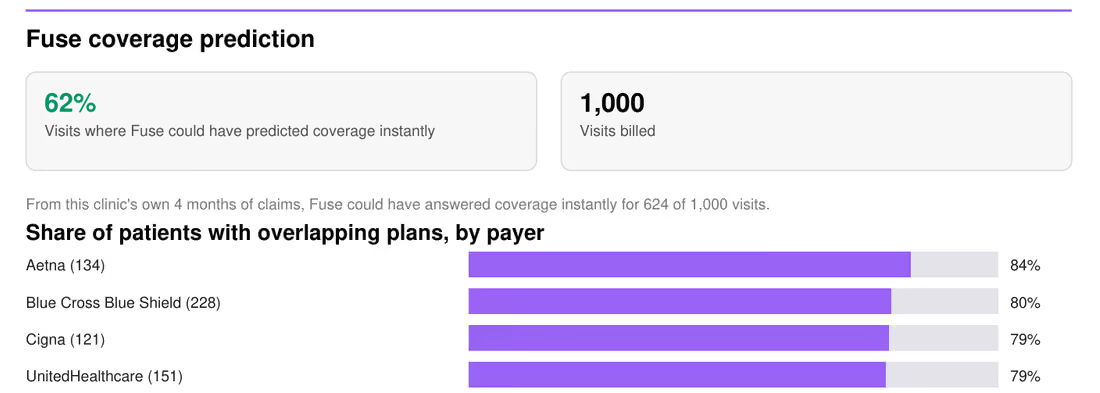

Fuse builds a model of payer behavior from your claims: underpayments flagged, lapsed plans caught, coverage predicted for scheduled patients.
Get Your Free Revenue AnalysisFAQs
What does Blue Cross Blue Shield of Illinois pay for CPT 90837?
Blue Cross Blue Shield of Illinois's September 2026 files show a median of $133.67 for a 60-minute psychotherapy session among Illinois behavioral health clinicians. The mean was $143.68. Most clinicians appear at more than one rate, so compare your own fee schedule with the median rather than assuming you are paid the typical amount.
Does Blue Cross Blue Shield of Illinois have to cover CPT 90837?
Yes, for PPO plans that start or renew on or after January 1, 2027. Section 370c.4(e) of the Illinois Insurance Code requires covered plans to pay for medically necessary 60-minute therapy billed as 90837. They cannot demand more documentation for 90837 than for other therapy codes, or audit it more often.
How quickly must Blue Cross plans offer a therapy appointment in Illinois?
Within 10 business days of the request for a first outpatient mental health visit, and 20 business days for a follow-up. The Network Adequacy and Transparency Act also caps travel at 30 minutes or 30 miles in Cook, DuPage, Kane, Lake, McHenry and Will counties, and 60 minutes or 60 miles elsewhere. If no in-network clinician can meet those limits, the plan must make an exception to its network.
Can supervised trainees bill Blue Cross for therapy in Illinois?
From plan years starting on or after January 1, 2027, yes for covered plans. Section 370c.4(d) requires coverage of medically necessary care from a trainee working toward licensure under a fully licensed supervisor. The claim must list the supervisor's NPI as the rendering provider.
How long can Blue Cross take to credential a new therapist in Illinois?
60 days from a completed application, for plans that start or renew on or after January 1, 2027. Section 370c.4(f) counts credential checks inside those 60 days. Once the contract starts, the plan must pay the contracted rate for care given after the application was complete, as long as the claims go in after the contract date.